Book review: The shock of the old
David Edgerton's 2006 book argues that we misread technology because we only look at what's new. Twenty years later, it's one of the best guides I know to where IoT actually creates value.

Mattias Nahlin
Chief Strategy Officer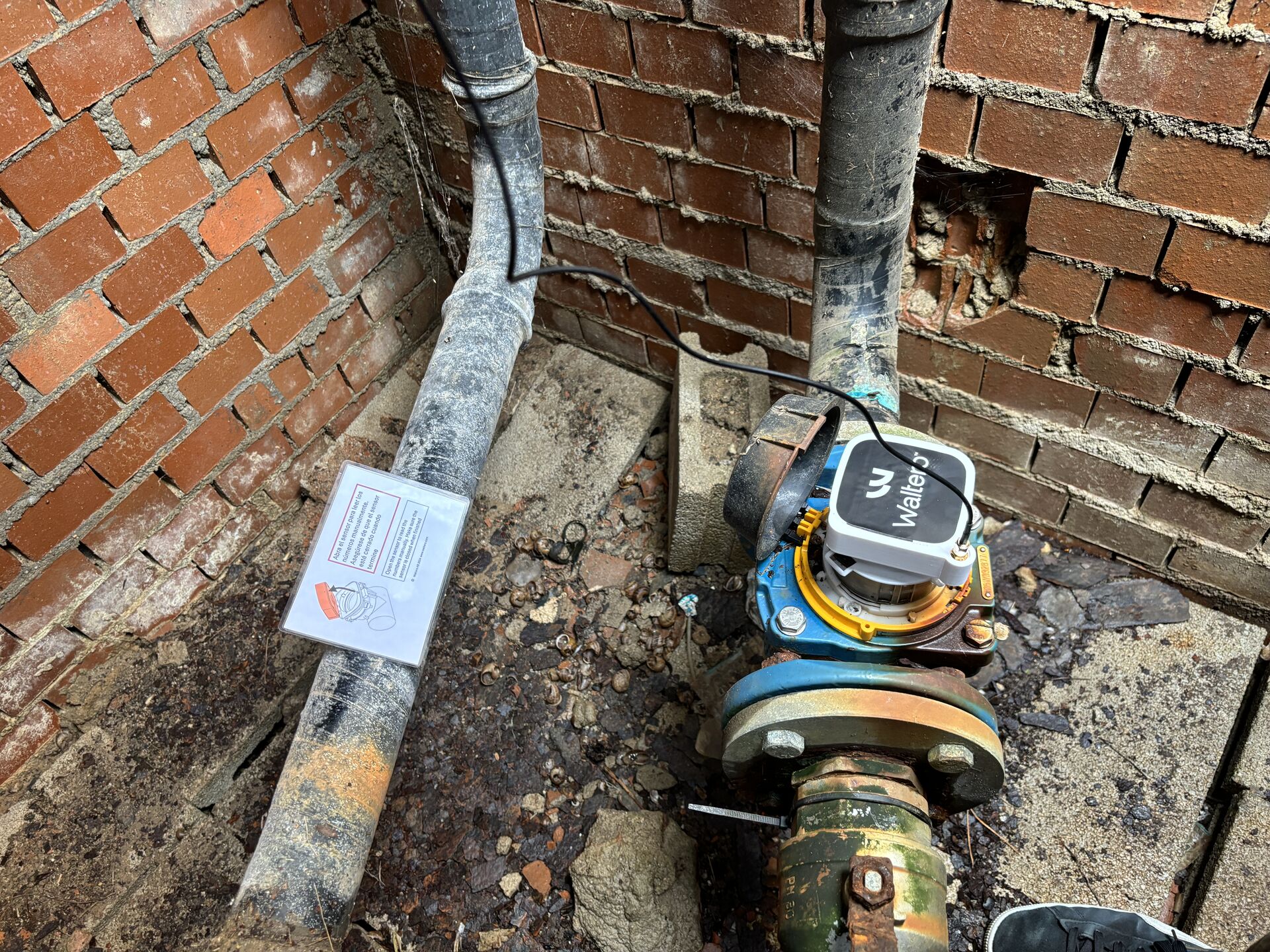 Most of what we say about technology is about what's new. Most of the infrastructure we depend on is old - and it works.
The water main under your street may well be older than anyone currently working at the utility. The pump station feeding it has probably outlived three generations of control systems. Nobody writes trend reports about it. It just keeps running.
That's the thread running through David Edgerton's The Shock of the Old: Technology and Global History since 1900. I read it recently and haven't stopped thinking about it since, mostly because it describes the world our customers work in better than most books about "smart infrastructure" do.
What the book argues
Edgerton, a historian of science and technology, makes a simple distinction that turns out to be very powerful. Most history of technology is innovation-centric: it jumps from breakthrough to breakthrough, electricity to the car to the computer to the internet, and assumes each new thing replaces the last.
Look instead at what people actually used, he says - technology-in-use - and the picture changes completely. Old technologies persist, often for decades longer than anyone expected. They're frequently more widespread than the new ones getting the headlines. His examples range from the horses that armies still relied on in the Second World War to corrugated iron, the bicycle and the sewing machine, all of which kept spreading long after they stopped being "new".
He also points to what the innovation story leaves out almost entirely: maintenance, repair and adaptation. It's a huge share of the work that keeps technology running, and almost nobody writes about it.
It's not a long book, and it's not a technical one. But it's the kind that quietly rearranges how you look at things.
Old infrastructure isn't obsolete. It's what everything runs on.
Utilities live Edgerton's argument every day. Pipes, valves, pumps, heat exchangers and mechanical meters aren't "legacy" in the sense of waiting to be replaced. They are the system. Many were built to last 50 years or more, and many will.
Yet in strategy decks, vendor pitches and even trend reports, the installed base is often treated as the problem - something to be solved by replacing it. That framing is expensive. It's also slow, because replacement runs on budget cycles and construction timelines, not on software release cycles.
I think the installed base should be seen as an asset to read, not a liability to remove. A mechanical meter or a pressure gauge that has worked reliably for 20 years is already doing the hard part: measuring. What it lacks is a way to tell anyone.
Maintenance is the invisible majority
For me, the chapter on maintenance is the most relevant one for anyone running infrastructure. Keeping things going is a constant, enormous activity, and it barely counts as "technology" in the public imagination.
In a utility, it's where most of the operational effort goes. Meter rounds. Site visits. Checking whether a pump sounds right, noticing that a tank level looks off. It's also where most of the know-how sits, often with experienced technicians who are getting closer to retirement.
This is where IoT actually earns its place. Not by replacing the asset, but by changing how it's looked after. Instead of driving out to read a gauge, the reading arrives on its own. Instead of noticing a problem on the next visit, a deviation from normal is flagged the day it starts. Maintenance moves from calendar-driven to condition-driven - and some of what the senior technicians know about "normal" starts to live in the data, not only in their heads.
We saw this clearly with VA SYD in Skåne. Just giving the team remote images of their inlets cut routine site inspections by 66 percent, before any AI was involved at all. The inlets didn't change. How they were looked after did.
New technology wins by fitting into the old
Edgerton shows that new technologies rarely sweep the old ones away. More often they get layered on top, adapted and combined with what's already there. That's how they actually spread.
I think that's exactly the right model for digitalizing infrastructure. The question isn't "how do we replace this asset with a smart one?" It's "how do we make this asset readable without touching it?"
That's the idea behind the W-Sensor. It clamps onto the meter, gauge or display that's already there, and its camera and edge AI turn what it sees into a number - without any intervention in the process and without touching the customer's network. Our Mimir platform then learns how each asset normally behaves and flags deviations and trends for the team to act on. Old, proven hardware keeps doing the physical work. A thin digital layer makes it visible.
Some will call that a compromise. In Edgerton's terms, it's simply how technology has always spread.
Is the book worth reading?
Yes, especially if you work anywhere near infrastructure, energy or industry. It won't give you a framework or a checklist. What it will do is make you a bit more skeptical every time someone says a technology "will replace" something. And a bit more respectful of the people who keep the old stuff running.
The timing is interesting too. McKinsey's latest Technology Trends Outlook 2026 ends up in a surprisingly similar place: the hardest constraints on energy, AI and infrastructure are now physical, not digital. I wrote about that here: McKinsey's Tech Trends 2026: the physical layer is the new bottleneck. Read together, they make the same case - the fastest way to modernize infrastructure is to make the infrastructure you already have visible.
If that's a conversation you're having in your organization, I'd be happy to have it with you too.
Relevant to your operations?
Talk to us about how we can help you increase control while saving money and trouble
%3Aformat(webp)&w=3840&q=75)


